


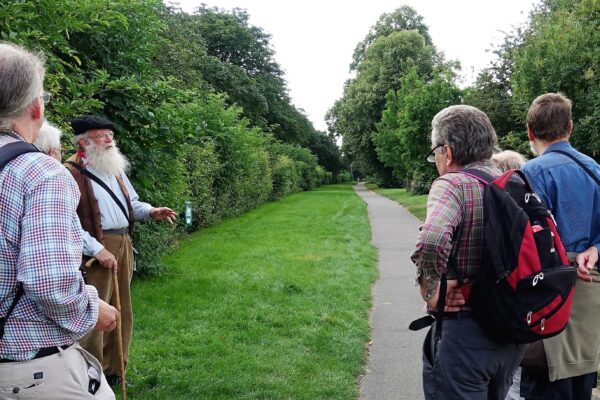
Abingdon, now in Oxfordshire, was historically the county town of Berkshire having changed in 1974 as part of the Local Government Act 1972. It was the site of the end of the Wilts & Berks canal built to bring coal from the Somerset coal fields. In August 2021 BIAG visited the site of the canal and had a tour conducted by Martin Buckland.
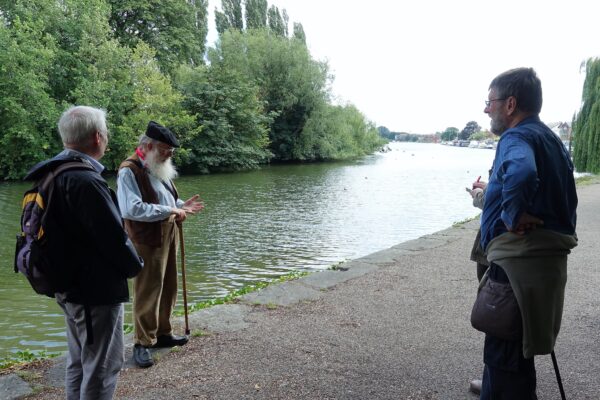
BIAG members & Martin Buckland near entrance to canal by River Thames
Route of Wilts & Berks Canal
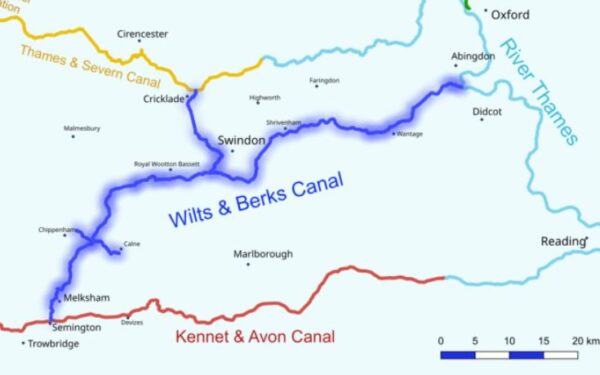
In 1793 a route was surveyed for a canal that would allow coal to be shipped from the Somerset coal fields to the towns of Wiltshire and Berkshire. Two years later a bill was granted Royal Assent and building was started on the canal at Semington. The canal, named the Wilts & Berks, was finished in 1810 at a cost of around £256,000. Unlike the Kennet & Avon canal, this was a narrowboat canal, taking craft of about 30 tons. Coal was supplied to the county by these two canals and then from the wharves along the routes by carts to the towns. Unfortunately, unlike the Kennet & Avon canal, the Wilts & Berks did not have a large flow of goods back in to Somerset and this made the economics poor, as a one-way route was not sustainable. Further problems in the 1840s when the Great Western Railway was completed, running from London to Bristol the speed with which it could transport goods took away more revenue from the canal. Trade continued to decline and in 1901 the Stanley Aqueduct on the canal was breached, causing a section to run dry of water and preventing through boat traffic. Thirteen years later an Act of Parliament was passed that allowed the canal to be formally abandoned, and at this time a number of bridges were demolished as without maintenance their safety could not be assured. Over time the canal dried, became overgrown and in places was built over. However, in 1977 The Wilts & Berks Canal Trust was formed and has since been working to restore much of this important canal. Martin Buckland has been closely involved in the restoration work and the wider management of the Trust.
Our tour began by the original entrance to the canal from the River Thames, on what is now Wilsham Road. By peering over the riverside, you can see the blocked entrance with Environment Agency signage. When built there was a lock that led on to a lozenge-shaped basin that then led on in to the canal itself.
Ordnance Survey Map 1875
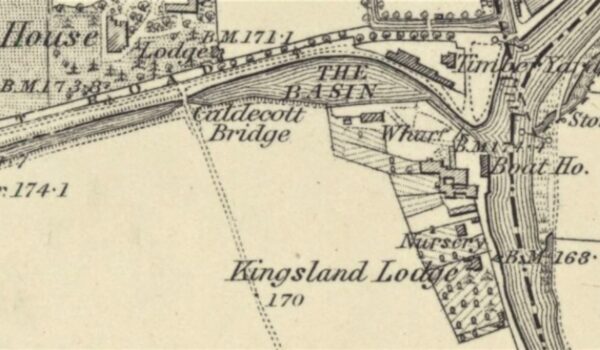
(Map ‘Reproduced with the permission of the National Library of Scotland’)
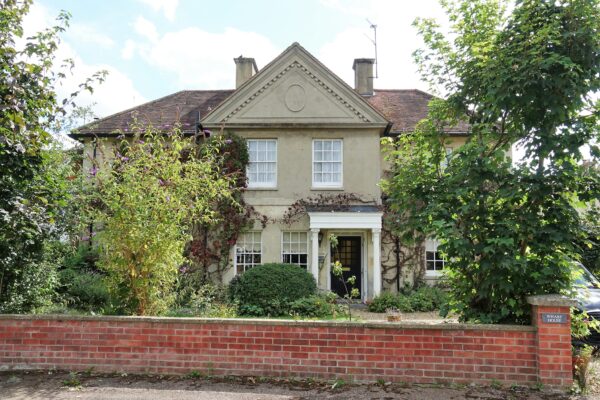
Going past the old entrance, we reached Wharf Close which houses two buildings of interest to the canal’s working. The first a house that was used as boarding for canal workers who were not able or wanting to stay on their canal boats when traversing the waterways, and the second Wharf House, which was once the home of the canal manager.
Boarding house for waterways workers
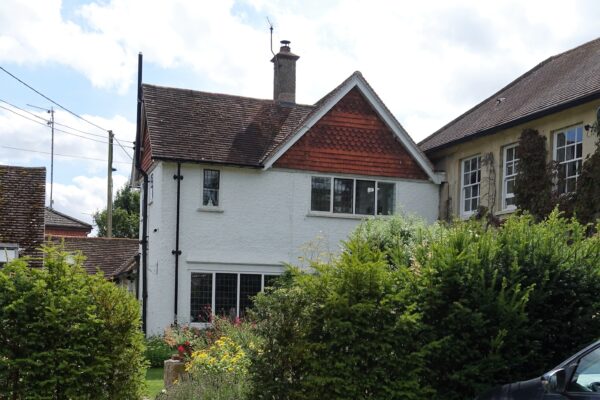
Wharf House - Former home of canal manager
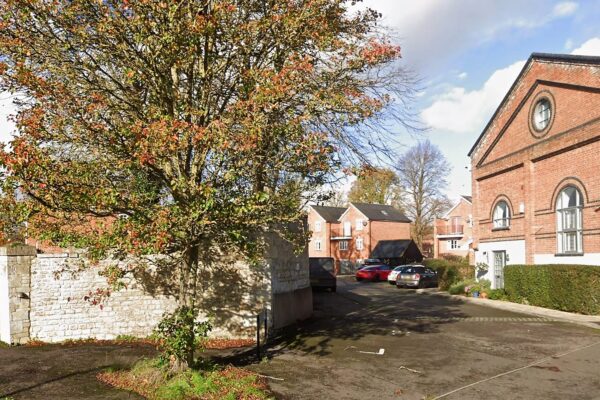
At the river end of the Close there are brick walls to either side which are part of the original canal infrastructure and as you pass the right-hand wall heading back towards Abingdon along Wilsham Road we turned in to what would have been the canal lock. On one side there are lock stairs and on the other the red brick building has an acute angle where it would have run alongside the canal.
Canal lock stairs
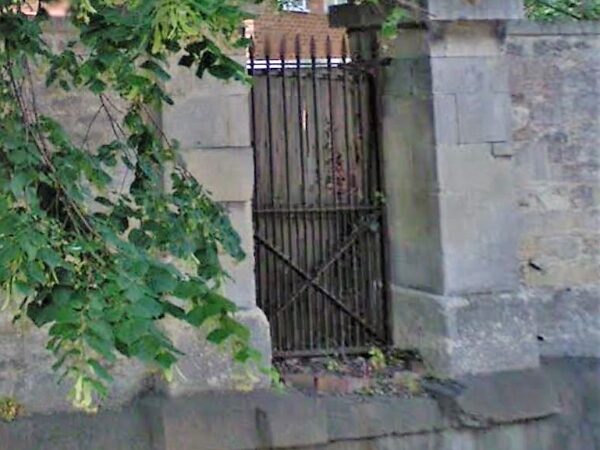
Entrance to canal lock
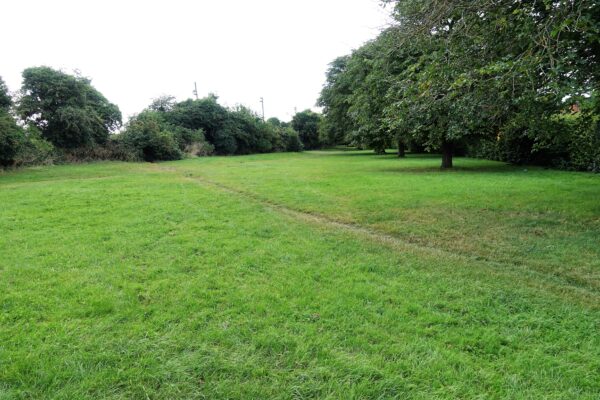
Passing through a new housing estate and along Caldecott Road to the recreation area the original line of the tow path and trees lining the edge can still be seen. The in the recreation area you can see the lozenge shape of the original canal basin.
Canal tow path route and trees
Canal Basin now recreational area
Martin then took us across the B4017, where the roundabout is raised due to it being built over one of the canal bridges demolished when the canal was abandoned. The canal route then passes through a new housing estate and along a narrow pathway through a wooded area. There is a World War II bunker amid the path, which would have been part of the Red Line that followed canals and waterways as a means of holding up any invading forces. We came back to Abingdon along the River Ock, enjoying the countryside and stopping to see the World War II tank traps, known as Dragon’s Teeth, which allowed us a short respite.
Bibliography and Sources:
- British History Online: A History of the county of Wiltshire – Canals
- Wilts & Berks Canal Trust