


In the 1980s the Dymore Brown Royal Albert brewery site at the junction of Queens Road and East Street in Reading was to be knocked down for redevelopment linked to the planned new Inner Distribution Road. Very little of the site remained when members of BIAG visited in 1990 to record what was left of the shell and internal contents. This article relates the history of the brewery and the site, and show the photographs that were captured in 1990.
Royal Albert Brewery - View from East Street 1990 taken by Dennis Johnson
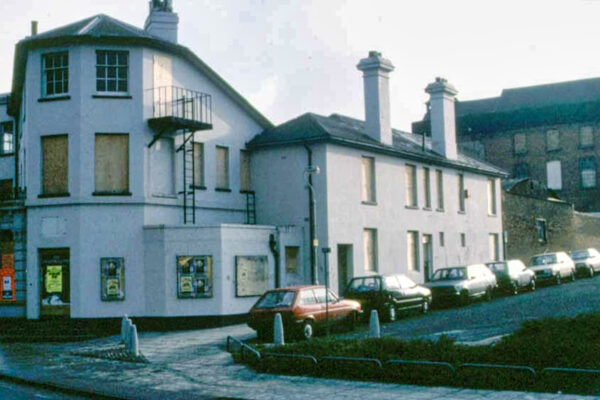
Royal Albert Brewery - East side of brewery yard 1990 taken by Dennis Johnson
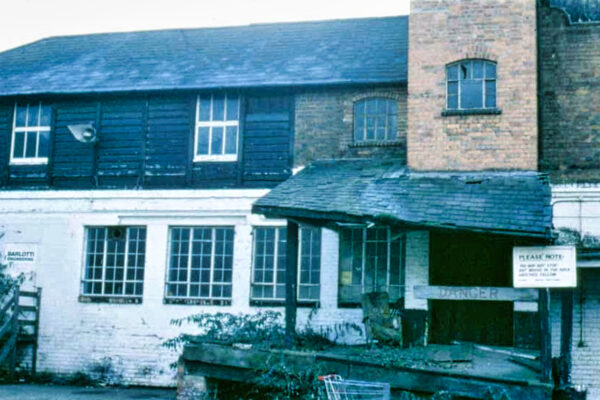
Royal Albert Brewery - South side of brewery yard showing water tank on roof 1990 taken by Dennis Johnson
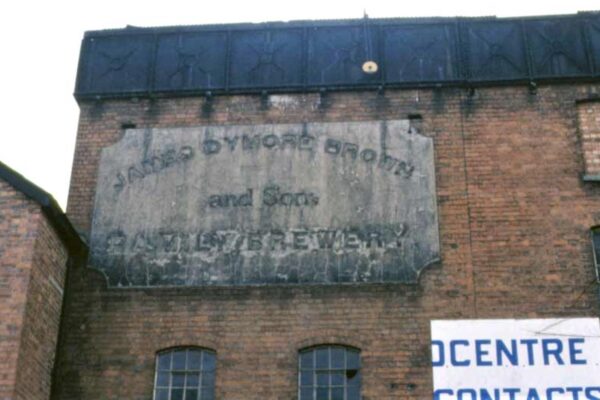
James Dymore Brown, born in 1803, was the second son of Thomas Brown and Mary Dymore. His parents were farmers in Wiltshire, but this was a time when changes in tenancy arrangements and war made working on the land a hard existence. James turned to brewing as a profession, starting in Hoxton in East London.
In 1830 the Beer Act was passed in England. This removed the monopoly on public houses that the breweries had sustained by abolishing beer duty and allowing beer houses to open at will subject to only a small licence fee. Before the Act, in Reading there were only two public houses not tied houses. The situation often led to the beer being of poor quality and high price because there was no ongoing competition.
Not long after the Act’s passing Charles Moody established a retail brewery at 106 Castle Street, Reading. The site was next to Vachell’s Almshouses and later became 71 Castle Street. What happened to Charles is uncertain, but the brewery became available and in 1831 James Dymore Brown took over the premises. In his first year of operation, he produced 860 barrels, which in comparison was around a twelfth of the output of Blackall Simonds, who at the time were Reading’s premier brewers. Quickly his output grew, being around 1,110 barrels a year for the next six years. The brewery had two retail outlets; one was the Tap House next to the brewery and the other the Royal Albert Tavern in Queens Road. He also acquired two plots of freehold land on the corner of East Street and Queens Road as the eastern part of Reading began to develop.
The brewery’s reputation grew and by 1854 it held the contract to supply beer to the Royal Berkshire Hospital, who used it as a tonic to counteract anaemia. By now James had a growing family and two of his sons were trained as brewers, with James Dymore Brown, the younger, being apprenticed at Wells’ Brewery in Wallingford which for some time was the largest brewery in the county. This son emigrated to Australia and ended up acting as agent for his father’s beer in the country.
In 1860 the elder James acquired the lease to a plot of land in Queens Road which adjoined the two plots he already owned by The Queen’s Hotel. These areas combined provided enough land for him to build the Royal Albert Brewery. By 1862, the younger James had returned to England to handle the office work for the new brewery, which was completed in 1862. Notice of Removal appear in local papers around August 1865 telling customers that the brewery will now be permanently conducted from the Queens Road site. The site housed a thirty-quarter plant with a 50 lb Cornish boiler and produced an initially output of 3,000 barrels per year. The brewing took place tree times per week and was overseen by Edney Brown, another of James’ sons. Following the move to the Royal Albert brewery, the Castle Street site was sub-let to a series of tenants.
Royal Albert Brewery - Location within Reading (OS map 1931)
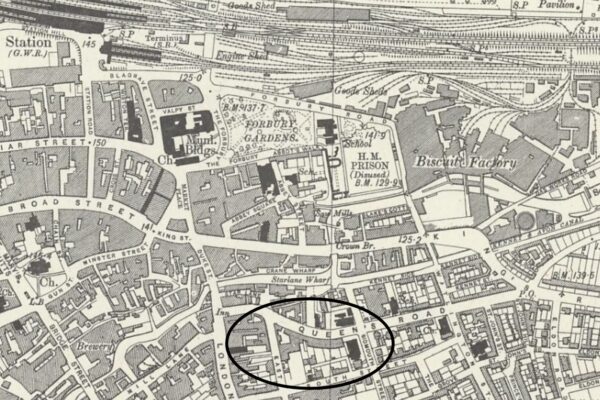
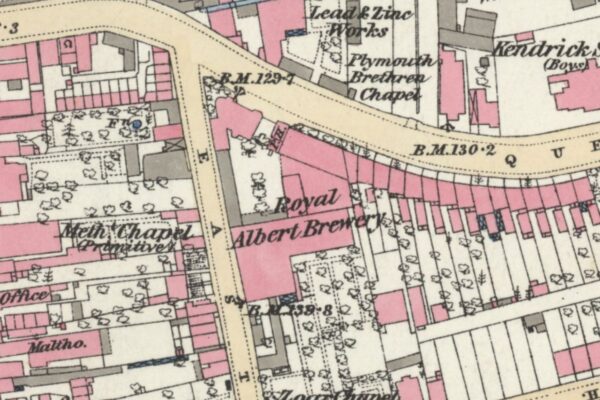
Royal Albert Brewery - Location on Queens Road and East Street (OS map 1875)
By 1867 production had doubled, and by 1873 it has trebled. This was driven by a plant expansion and the installation of two new 50 lb boilers made by the Reading Iron Works in Katesgrove Lane.
In 1871 James Dymore Brown handed the management of the business to his son James, who had already been instrumental in driving the expansion. By 1887 output was 14,000 barrels per year with two-thirds being supplied as ‘private trade’ in casks to farmers and landlords throughout the surrounding area. To achieve the business the brewery had nine agents in towns stretching from Hungerford to Windsor, and Oxford to Southampton. The logistics was supported by a vigorous campaign of advertising, however the brewery later restricted sales to a 20-mile radius to avoid difficulties in transport and administration.
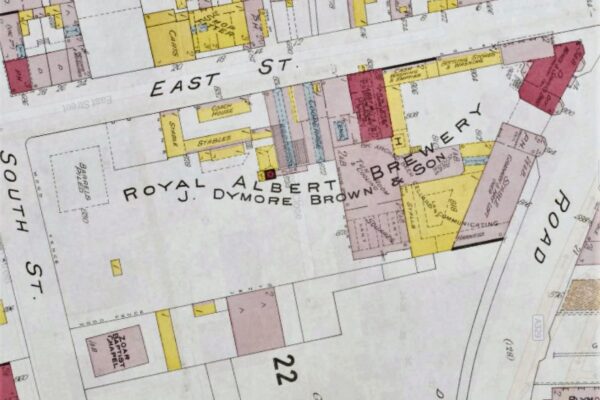
Royal Albert Brewery - Location (Goad Fire Insurance Map 1895)
Being situated in the newly growing east of Reading, the brewery was about the only wholesaler in the area. There was one short-lived competitor in the Berkshire Brewery Ltd from 1865 to 1881. This situation allowed them to almost monopolise supply to the area. However, they had limited tied houses, only five in comparisons to Simonds’ 160 and this limited income. This meant they were heavily reliant on the private trade to famers and large households. One advantage the brewery did has was its reputation, and at a time of various adulteration scares, it was known for the purity of the beers which were made of malt and hops alone.
By the time the second James Dymore Brown dies in 1899, it is his son – another James Dymore Brown – who is running the business. However, while James was responsible for the production the legal owner was Janet Dymore Brown, his mother.
Dymore Brown & Sons Ltd was incorporated as a limited company in May 1902, with share capital of £17,250. Of this money, all but £70 was owned by Janet; she later sold £6,000 to James. From a sound start sales began to fall and they were working with production equipment that was over 30 years old. However, the largest drain was in sales and marketing which employed a few highly paid staff while the majority of the sales were made through the company’s draymen. The other factor in the decline was the reliance on private sales while other breweries were operating mainly through tied houses. By 1906 net annual profits were below £150, having been £2,700 in 1902. While Janet Dymore Brown criticised the running of the operation, she was taking nearly £1,300 per year out of the profits for her own use. The pressure of the situation most likely led to James Dymore Brown’s dying of a stroke in 1906, aged only 48 years old. The running of the operation was then taken on by his son, the fourth James Dymore Brown.
Around the same time Morland & Co Ltd, who brewed in Abingdon, had taken over Ferguson & Sons’ Angel Brewery in Reading. Thomas Skurray, Morland’s Managing Director proposed an arrangement whereby Dymore Brown would brew for Ferguson and this would allow Ferguson’s valuable Broad Street site to be used for other purposes. When the other directors of Morland did not support his plan, he used his own wealth and interest to plan a merger between Dymore Brown and another brewery about 8 miles from Reading called H Hewett & Co Ltd. Hewett had the advantages of having a large number of tied houses and Dymore Brown had the quality and capacity to provide the beer. In May 1911 an agreement was signed which was to last for 14 years. This agreement kept the companies separate, but Hewett’s plant was dismantled and its registered office moved to Queens Road. Dymore Brown now brewed for both companies and paid a royalty to Hewett. While Skurray became chairman of Dymore Brown, James Dymore Brown continued as manager. As part of the arrangement Ferguson continued to produce wines and spirits which it supplied to Dymore Brown. The arrangements saw production at the Queens Road site rise and profits grow, with some of these profits being ploughed back into new buildings and equipment.
Through the following years of the agreement profits weren’t great, but production continued at Queens Road. When the time came to renew the relationships between the companies it ended with Morland absorbing both of them and brewing was discontinued at Queens Road. The Reading location became instead a bottling plant for beer shipped from Abingdon with James Dymore Brown remaining as manager in charge of administration and distribution.
In 1944 Morland became a public company and its subsidiaries were wound up, excepting Ferguson Ltd which became an agent for Morland wine and spirit trade. The name Dymore Brown was no longer used for trading purposes. James Dymore Brown was made a director and bottling continued at the Queens Road site until 1961. In 1970 the Queens Road site ceased to be a distribution depot.
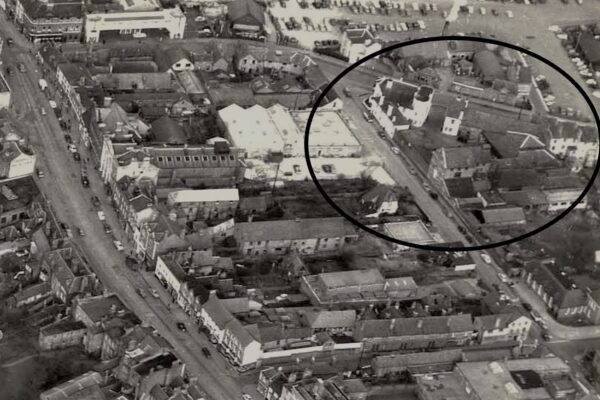
Royal Albert Brewery - Location shown on aerial view taken in 1960 (courtesy of Reading Library Collection)
Royal Albert Brewery 1970 (courtesy of Reading Library Collection)
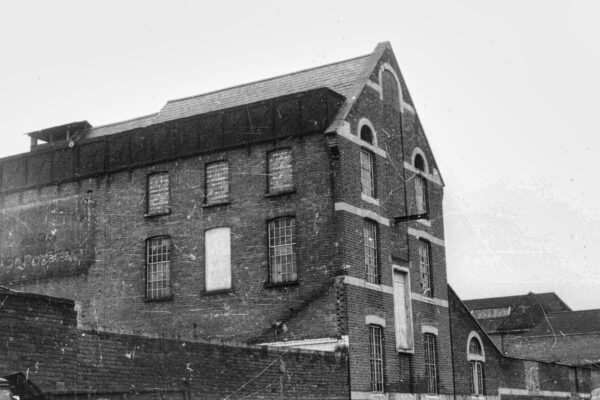
Royal Albert Brewery 1980 - seen from yard in Queens Road (courtesy of Reading Library Collection)
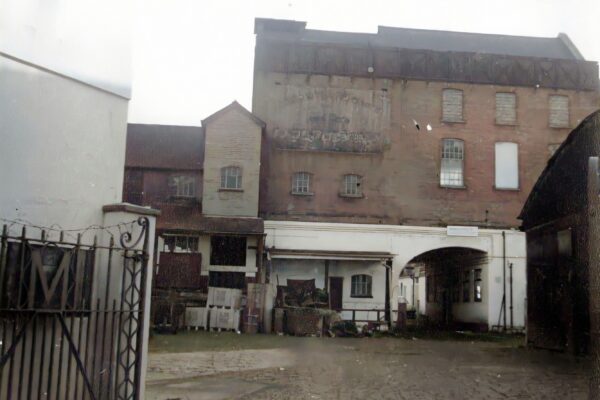
After this date, part of the site was used as a garage, but following a severe fire in October 1990 the buildings were razed to the ground to allow for new office development. Below are more of the photographs taken when BIAG visited the site in 1990.
Royal Albert Brewery 1990 taken by Dennis Johnson
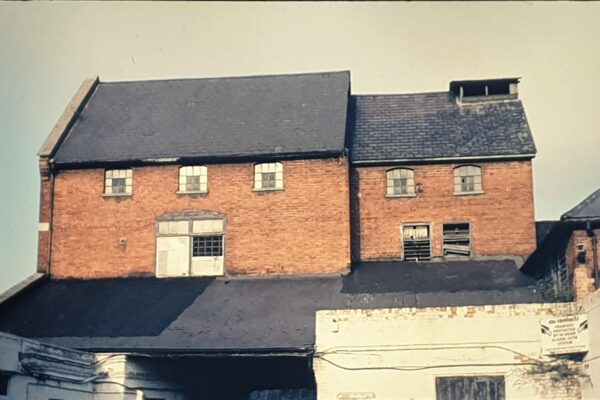
Royal Albert Brewery Interior 1990 taken by Dennis Johnson
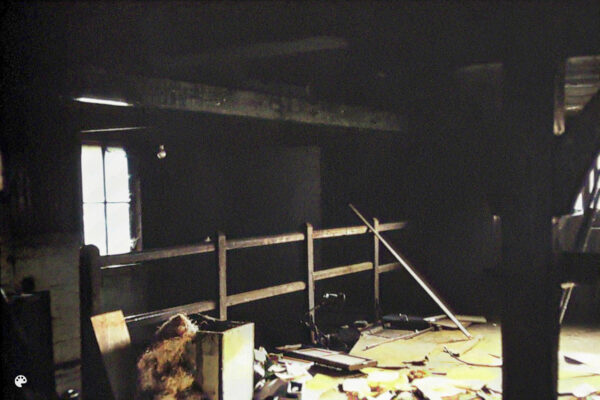
Royal Albert Brewery - Pulley Wheels 1990 taken by Dennis Johnson
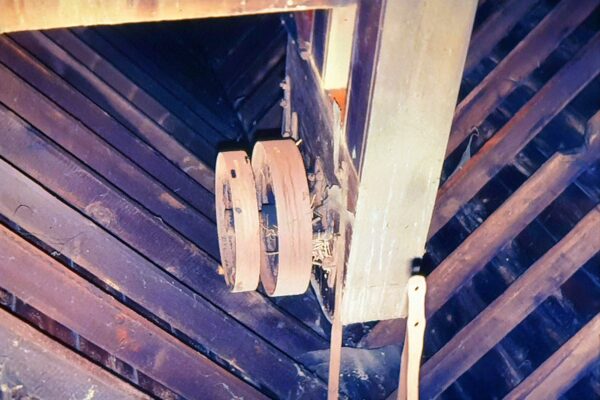
Royal Albert Brewery - Barley Chute 1990 taken by Dennis Johnson
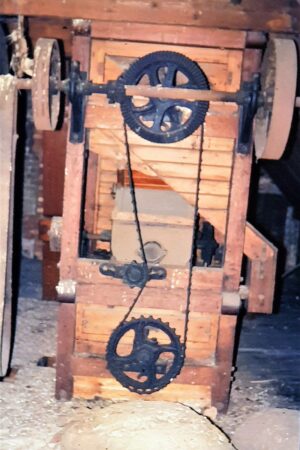
Royal Albert Brewery - Water Borehole 1990 taken by Dennis Johnson
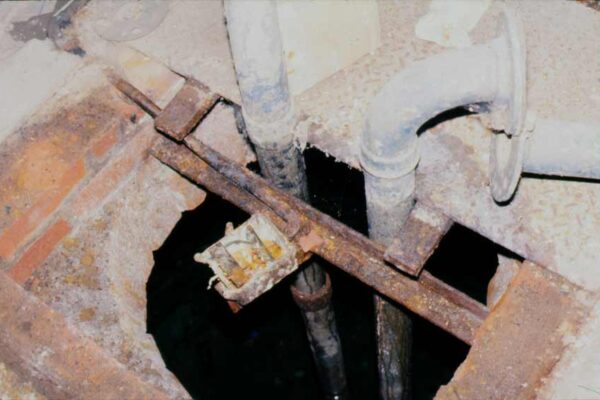
Royal Albert Brewery - Grain Processor Borehole 1990 taken by Dennis Johnson
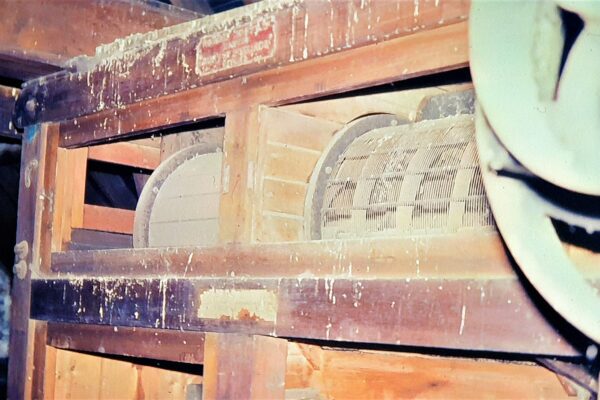
The Dymore Brown brewery was most noted for its ‘Family Pale Ale’. This was the brew supplied to the Royal Berkshire Hospital. They also made many other types of brew including ‘Dinner Ale’, light bitter ale, FPA season-brewed Ale, XXX Intermediate Ale, XXXX Strong Ale, India Pale Ale, Pale Light Bitter Ale and Bass Pale Ale.
Bibliography and Sources:
- A Small Berkshire Enterprise: J Dymore Brown & Son 1831-1944 by T A B Corley, Berkshire Archaeology Journal Vol 69 pp 73-80
- Abbot Cook to Zero Degrees: An A to Z of Reading’s Pubs and Breweries by John Dearing, David Cliffe and Evelyn Williams. Published by History of Reading Society (2021)
- Berkshire Chronicle: Notice of Removal (19 August 1865)
- Berkshire Record Office: D/EX 1660 – Records of Dymore Brown & Son Ltd of Reading, brewer 1772-1962
- Berkshire Record Office: D/EX1660/3/6/1-16 – Papers relating to H Hewett & Co Ltd of Waltham St Lawrence, brewers
- Berkshire Record Office: D/EX2468/1 – Copy provisional agreement for shares in H Hewett & Co Ltd
- Fire Insurance Plans – Charles E Goad (1875)
- OS Maps – reproduced with permission of the National Library of Scotland
- Reading Evening Post: Firebug probe after blaze at brewery site (18 October 1990)
- Reading Evening Post: Brewery Findings (13 November 1995)
- Reading Pubs: John Dearing (2009)
- The Old Breweries of Berkshire by T A B Corley, Berkshire Archaeology Journal Vol 71 pp 79-88